 Lunagisthub
Why Corruption is Nigeria’s Biggest Economic Hurdle: EFCC and CCB Forge New Alliance
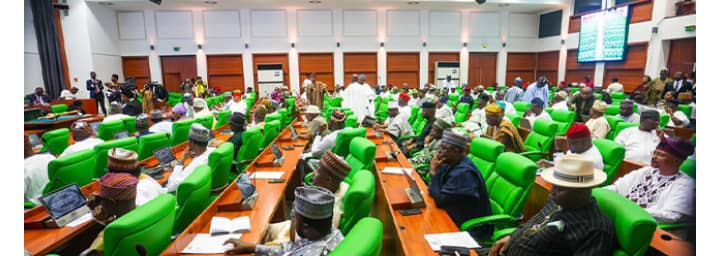
Nigeria stands at a critical crossroads where the fight against corruption is no longer just a legal battle—it is an economic necessity. In a landmark move to bridge the gap between policy and enforcement, the Economic and Financial Crimes Commission (EFCC) and the Code of Conduct Bureau (CCB) have officially joined forces to tackle the financial crimes crippling the nation’s growth.
The Cost of Corruption: More Than Just Stolen Money
During the signing of a Memorandum of Understanding (MoU) in Abuja on February 18, 2026, EFCC Chairman Ola Olukoyede delivered a sobering reminder: corruption is the direct architect of Nigeria’s most pressing social ills.
According to Olukoyede, the nation’s struggle with poverty, hunger, malnutrition, and a massive infrastructure deficit is fundamentally linked to the leakages caused by financial crimes. The message is clear: until Nigeria plugs these holes, sustainable development remains a distant dream.
Collaboration Over Competition: A New Strategic Framework
One of the most significant takeaways from the meeting between Olukoyede and CCB Chairman Dr. Abdullahi Usman Bello was the emphasis on “synergy” rather than “rivalry.” In the past, overlapping jurisdictions between anti-graft agencies have sometimes led to inefficiency.
This new MoU aims to eliminate those bottlenecks through:
- Intelligence Sharing: Real-time exchange of data to track illicit wealth.
- Technical Cooperation: Leveraging modern tools and AI to identify suspicious financial patterns.
- Administrative Support: Streamlining the process of investigating public officers and asset declarations.
“We must not compete. We must collaborate and work with sincerity of purpose. If we work as a team, we can probably take Nigeria out of this mess.” — Ola Olukoyede, EFCC Chairman.
How This Partnership Impacts Nigeria’s Infrastructure
Infrastructure is the backbone of any economy. When funds meant for roads, power plants, and hospitals are diverted, the entire economic ecosystem suffers. By strengthening the partnership between the CCB (which monitors the conduct of public officers) and the EFCC (which enforces financial crime laws), the government is signaling a “pincer movement” against corrupt officials.
For investors, this move is a positive signal. Improved transparency and a reduction in corruption are key metrics that international rating agencies use to determine a country’s ease of doing business.
What’s Next for the Anti-Graft Campaign?
Dr. Abdullahi Bello described the agreement as a “significant milestone.” However, the true test lies in the implementation. The Nigerian public is eager to see if this unified front will lead to faster prosecutions and, more importantly, the recovery of assets that can be reinvested into the economy.
What do you think? Can stronger collaboration between the EFCC and CCB finally turn the tide against corruption in Nigeria? Share your thoughts in the comments below!


 Lunagisthub