 Lunagisthub
The Enemy Within: Shocking Revelations Expose How Terrorists Are Infiltrating Nigeria’s Security Forces
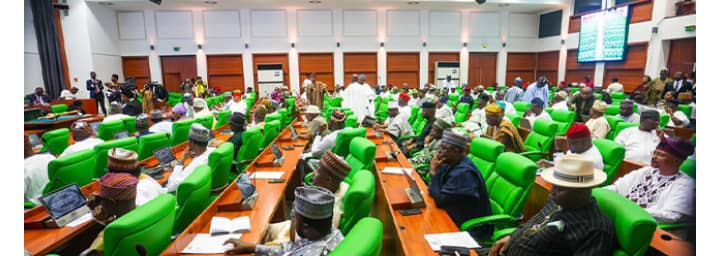
In a shocking turn of events that has sent ripples through the Nigerian political landscape, fresh revelations from the House of Representatives have confirmed a terrifying reality: the war against insurgency is being sabotaged from the inside.
For years, security experts have speculated about “moles” within the military. However, recent admissions by high-ranking lawmakers have moved this from conspiracy theory to confirmed fact.
In this deep dive, we explore the harrowing admission that Boko Haram members are being shortlisted for military recruitment, the regional burden of insecurity, and why a “kinetic” approach alone is failing Nigeria.
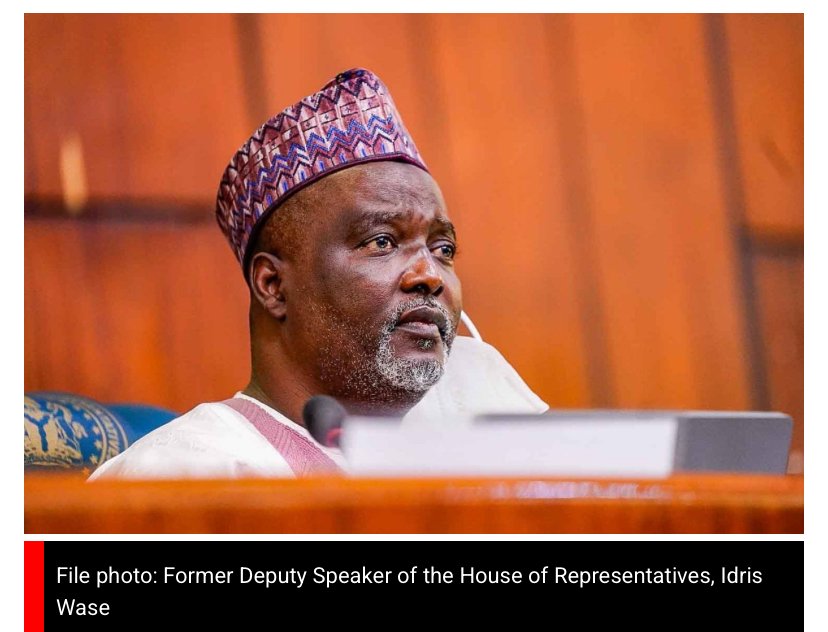
The most alarming disclosure came from the former Deputy Speaker of the House of Representatives, Ahmed Wase. In a candid discussion regarding the state of the nation, Wase dropped a bombshell that explains the resilience of insurgency in the country.
He revealed that during official recruitment exercises for the Nigerian Army and Police, names of known Boko Haram members have appeared on the shortlist.
“My brother and friend, the former Defence Committee Chairman, Honourable Betara can attest to this,” Wase stated. He went further to highlight that it wasn’t just insurgents; armed robbers and convicted criminals were also being cleared for service.
This admission points to a catastrophic failure in the vetting process. When the enemy is wearing the same uniform as the protector, intelligence is compromised, operations are ambushed, and trust in the security architecture collapses.
Wase cautioned politicians and community leaders against “reckless endorsements.” The practice of handing out recruitment slots as political patronage has inadvertently opened the back door to the very enemies the state is trying to fight.
While the North East has historically been the face of the insurgency, the data suggests a dangerous shift. Wase revealed that the North Central region now bears approximately 52% of the country’s overall insecurity burden.
This is personal for the lawmakers. Wase shared the heartbreaking detail that he has lost a brother, a cousin, and a nephew to terrorist attacks. The situation has deteriorated to the point where his own family members are pleading to be relocated from their ancestral homes.
Representing the North-West Caucus, Sada Soli provided a nuanced analysis of why the current strategy is failing. He argued that the government is treating a complex socio-economic problem solely as a military one.
Soli described the insecurity in the North West as “layered,” fueled by:
- Weak Governance: A lack of government presence in rural areas.
- Environmental Pressures: Scarcity of resources leading to farmer-herder clashes.
- Economic Despair: Poverty driving recruitment into banditry.
“Lasting peace depends on rebuilding trust in government, reforming land and livestock systems, and ensuring that communities help shape solutions,” Soli argued.
The debate also touched on the controversial issue of political will. Senator Solomon Bob (PDP, Rivers) did not mince words, accusing successive administrations since 1999 of “leadership failure.”
His argument cuts to the core of the controversy regarding amnesty and negotiations. Bob criticized the government’s tendency to “placate terrorists” and negotiate with killers rather than enforcing the law. He noted that labeling terrorism merely as “banditry” acts as a PR stunt that downplays the severity of the crisis and prevents the necessary international legal frameworks from kicking in.
Amidst the high-level policy talk, Kafilat Ogbara, Chairman of the House Committee on Women Affairs, reminded the nation of the human cost. She highlighted that women and children continue to suffer the most, citing recent mass abductions in Papiri and Kamba.
When the state fails to vet its own soldiers and protect its borders, it is a breach of the social contract. As Ogbara noted, this is a fundamental failure of the state’s core obligation to safeguard lives.
The revelation that criminals and terrorists are infiltrating the Nigerian Army is a wake-up call. The solution requires immediate, drastic steps:
- Strict Vetting: A complete overhaul of the recruitment process, removing political quotas.
- Smart Policing: Wase called for a review of withdrawing police from VIPs, suggesting a balanced approach that protects officials without leaving the masses vulnerable.
- Holistic Strategy: As suggested by the North-West caucus, economic and environmental reforms must run parallel to military operations.
Until the “enemy within” is purged from the ranks, the Nigerian security forces will continue to fight with one hand tied behind their backs.
What are your thoughts on the recruitment vetting process? Share your comments below.


 Lunagisthub