 Lunagisthub
“Capital Punishment is the Only Way”: Senate Declares War on Kidnapping as Insecurity Hits Breaking Point
The gloves are coming off in the Red Chamber.
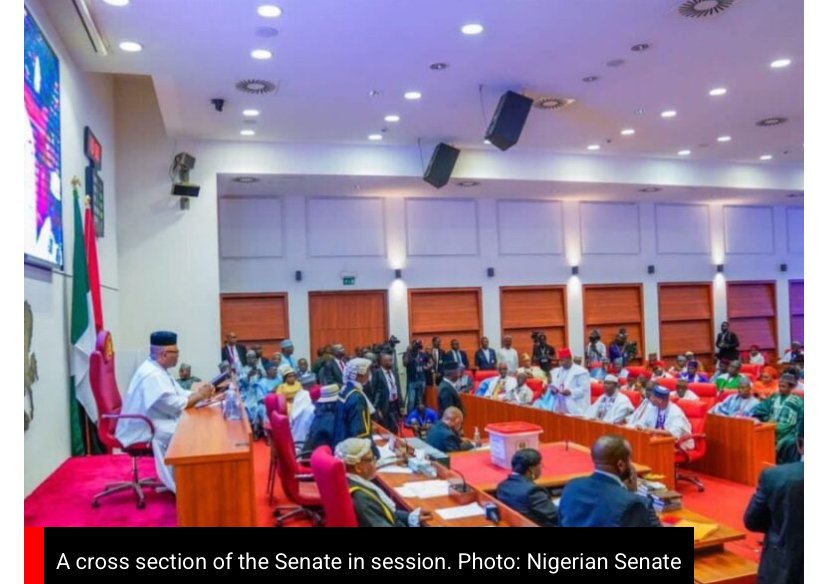
Amidst a frightening surge in school abductions and highway banditry, the Nigerian Senate has taken a hardline stance, declaring that kidnapping has evolved into full-blown terrorism. In a rowdy and decisive plenary session on Wednesday, lawmakers pushed for the death penalty for convicted kidnappers and dissolved key security committees in a rare admission of institutional failure.
If you have been following the news, you know the situation is dire. But what exactly did the Senate decide, and how does it affect the common Nigerian? Here is a breakdown of the critical resolutions that could reshape Nigeria’s security architecture.
The era of treating bandits with kid gloves appears to be over. Senators argued that the current legal framework is too lenient. The consensus? Capital punishment must apply.
Lawmakers insisted that judges should be stripped of the discretion to reduce sentences for convicted kidnappers. The argument is simple: if these criminal networks are holding the nation to ransom, the punishment must be absolute.
The most heartbreaking aspect of this security collapse is the impact on education. The Senate revealed a grim reality:
- Total Shutdown: All schools in affected local governments across Kebbi and Niger states have been forced to close.
- Partial Shutdown: Five LGAs in Kwara have halted academic activities.
- Federal Impact: All 47 Federal Unity Colleges nationwide are facing unprecedented threats.
Senator Issa Jibrin (Kogi East) dropped a bombshell statistic regarding the nation’s defense capabilities. He warned that Nigeria is woefully under-protected.
“Nigeria’s entire military, police, and paramilitary personnel do not total one million.”To put this in perspective, Jibrin compared Nigeria to Egypt—a country with a smaller population but a security force of 1.5 million. The Senate is now pushing for urgent recruitment, a reserve force, and a massive upgrade in equipment to support our overstretched troops.In a surprising move of “institutional self-critique,” the Senate turned the searchlight on itself. Senate Leader Opeyemi Bamidele argued that they could not blame the Executive arm while their own oversight was lacking.
Consequently, the Senate dissolved with immediate effect:
- The Committee on National Security and Intelligence.
- The Committee on Air Force.
All other security-related committees have been given a one-week ultimatum to submit oversight reports.
Why are bandits so successful? Senate President Godswill Akpabio raised the alarming issue of intelligence compromises. He cited instances where military movements—and even the locations of senior officers—were leaked to criminals.
This was echoed by Senator Enyinnaya Abaribe, who highlighted credible reports that soldiers were withdrawn from a Kebbi school just hours before bandits struck. “If I were the Commander-in-Chief, I would demand answers,” Abaribe stated.
Security isn’t just about guns; it’s about infrastructure. Lawmakers pointed out that the dilapidated state of the Idofian–Omu-Aran–Eruku–Egbe–Kabba corridor has turned it into a trap for travelers and an escape route for bandits. The Federal Ministry of Works has been directed to begin immediate reconstruction to hamper criminal mobility.
The Senate has resolved to strengthen registered vigilante groups with federal support and is actively reviewing firearms laws. The goal? To potentially allow for the “controlled arming” of responsible citizens to defend themselves.
As the Senate calls on President Tinubu to “rejig the security architecture,” the message is clear: The current strategy isn’t working, and the legislative arm is ready to take drastic measures to stop the bleeding.
What are your thoughts? Do you support the death penalty for kidnappers? Should citizens be allowed to carry arms for self-defense? Drop your comments below.


 Lunagisthub