 Lunagisthub
CSOs Demand Urgent Review of Cross River Forestry Law to Tackle Crime and Deforestation
Environmental advocates and civil society organisations are calling for a comprehensive overhaul of the forestry laws in Cross River State, warning that weak penalties and outdated regulations are fueling illegal logging, forest crimes, and biodiversity loss.
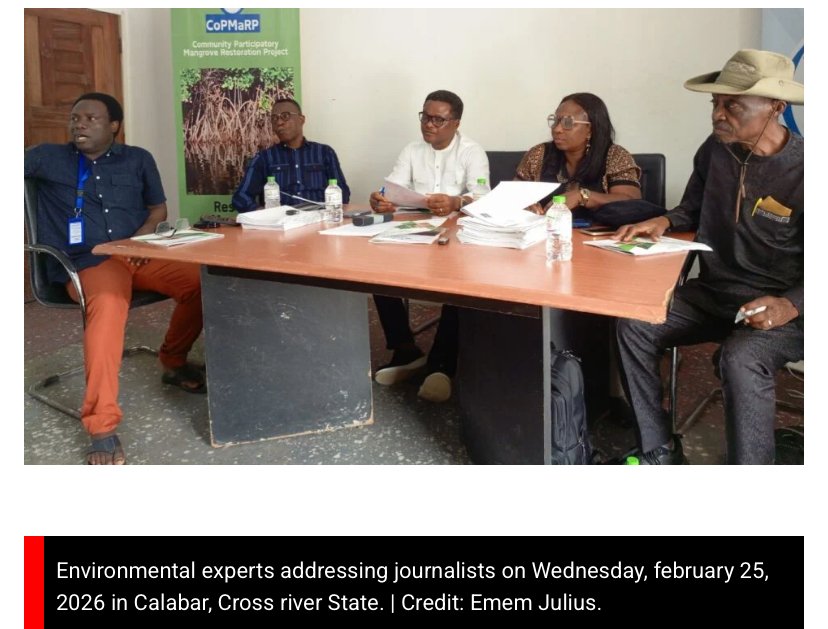
At a media briefing in Calabar on February 25, 2026, stakeholders stressed that reforming the Cross River Forestry Commission Law is critical to curbing deforestation, improving enforcement, and unlocking sustainable economic opportunities tied to forest conservation.
Cross River is widely regarded as home to Nigeria’s largest and most biologically diverse tropical rainforest ecosystem. However, environmental experts revealed that the state has already lost more than 60% of its original forest cover.
Once-lush rainforest areas are now degraded lands and expanding grasslands, largely due to illegal logging, wildlife trafficking, and weak regulatory enforcement.
According to environmental campaigners, if urgent reforms are not implemented, Nigeria risks permanently losing one of its most valuable ecological and economic assets.

Speaking at the briefing, Ken Henshaw, Executive Director of “We The People,” argued that the current forestry law contains penalties that fail to deter offenders.
For example, when trucks used in illegal logging operations are seized, offenders are often required to pay a fine of just ₦200,000 — a sum critics describe as insignificant compared to the profits made from illegal timber trade.
Environmental experts say such minimal fines effectively serve as an incentive rather than a deterrent, allowing illegal loggers to treat penalties as routine business costs.
To address this loophole, stakeholders are recommending:
Stronger, proportionate sanctions aligned with the severity of forest crimes
Enhanced monitoring and surveillance systems
Better coordination among enforcement agencies
Legal reforms that close enforcement gaps
Beyond environmental protection, experts highlighted the economic potential of forest conservation in Cross River State.
With proper governance, the state’s rich biodiversity and scenic landscapes could position it as a leading ecotourism destination in Nigeria and West Africa. Sustainable forest management can:
Generate revenue
Create jobs
Attract private investment
Promote long-term environmental sustainability
However, declining forest cover, insecurity linked to illegal activities, and weak governance frameworks continue to undermine this potential.
Stakeholders are urging lawmakers to ensure that any revised forestry law incorporates ecotourism principles directly into forest governance structures.
Providing legal backing for conservation-driven enterprises
Encouraging public-private partnerships
Promoting community participation in forest management
Recognising traditional knowledge systems
Establishing community-based forest monitoring mechanisms
Experts argue that empowering local communities will strengthen accountability and improve forest protection outcomes.
Environmental leaders warn that without immediate action, Cross River could face irreversible ecological damage. The destruction of its forests not only threatens wildlife habitats but also undermines economic prospects for future generations.
Reforming the Cross River Forestry Commission Law, they say, is no longer optional — it is essential for combating environmental crime, restoring degraded lands, and securing sustainable development.
The growing call for reform reflects a broader shift toward stronger environmental governance in Nigeria. As forest loss accelerates and climate concerns intensify, Cross River State stands at a critical crossroads.
With bold legislative reforms, stronger enforcement, and community engagement, the state could transform its forests from exploited resources into pillars of sustainable economic growth.
If implemented effectively, these reforms may not only curb deforestation but also redefine Cross River as a model for conservation-led development in Nigeria.


 Lunagisthub