 Lunagisthub
The Ongoing Dispute Between Akwa Ibom state And Cross River State Over 76 Offshore Oil Wells :A Review of the Supreme Court’s 2012 Decision.
The dispute between Cross River State and Akwa Ibom State over 76 offshore oil wells has been ongoing for years, with the Supreme Court’s 2012 decision being a significant milestone in the case. Despite the judgment, the issue remains unresolved, with both states claiming entitlement to the oil wells
In its 2012 judgment, the Supreme Court ruled that Cross River State no longer maintained a seaward coastline contiguous to the open sea extending to the 200-metre isobath, and therefore could not claim automatic offshore entitlement based solely on littoral status. However, the Court did not determine ownership of the 76 oil wells, nor did it award them to Akwa Ibom State.
The Supreme Court left the responsibility for oil well attribution to federal agencies, including the National Boundary Commission (NBC), the Office of the Surveyor-General of the Federation (OSGOF), and the Revenue Mobilisation, Allocation and Fiscal Commission (RMAFC). These agencies were tasked with ascribing the oil wells to the offshore boundary between Cross River State and Akwa Ibom State based on proper technical determination .
Despite the Supreme Court’s judgment, the NBC, RMAFC, and OSGOF have consistently ascribed derivation from the 76 oil wells to Akwa Ibom State, without conducting scientific, geological, or hydrographic surveys to verify the actual coordinates and locations of the wellheads. This administrative practice has been called into question, with Cross River State arguing that the attribution is not supported by scientific evidence .
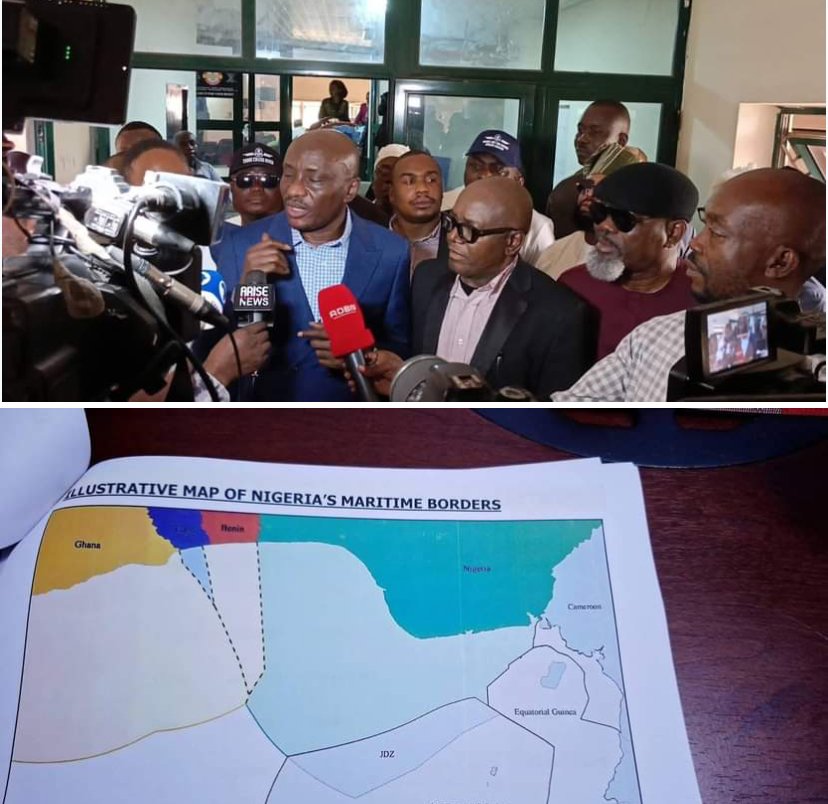
Recently, Cross River State submitted a petition to the President and the Inter-Agency Committee, providing comprehensive scientific, geological, and maritime evidence, including surface coordinates of 245 oil wells, reservoir coordinates of 188 wellheads, and 41 shared reservoir continuity straddles. This evidence aims to determine the precise offshore locations of the 76 oil wells in relation to the maritime boundaries of both states .
The dispute over the 76 offshore oil wells highlights the complexities of maritime boundary disputes and the importance of scientific evidence in resolving such cases. As the issue remains open to lawful reassessment, it will be interesting to see how the federal agencies and the courts address the matter.


 Lunagisthub